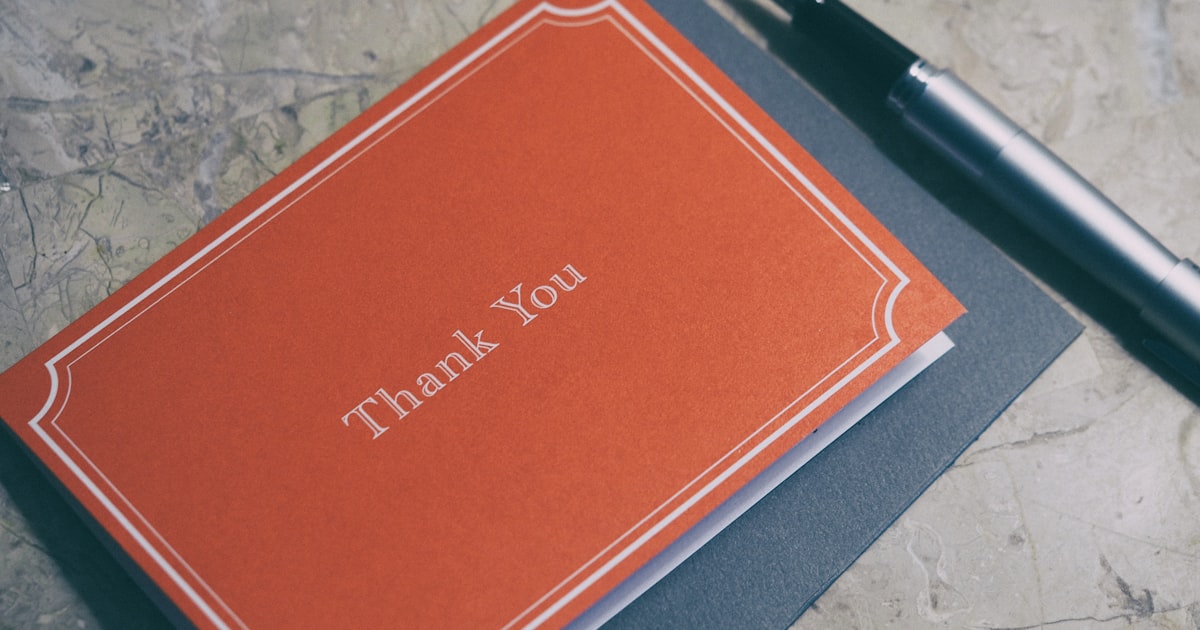

The first time my sister sent me a birthday card with our father's old photo printed on the front, I cried in the parking lot of a CVS. The second time anyone sent me a photo card - the property manager of my building, with a stock image of confetti and balloons - I laughed and tossed it before I made it to the apartment door. Same format. Opposite outcome.
An AI wish generator with photo support sits exactly on that line. It's the same tool in both stories. The difference is everything around it - the photo you pick, your relationship with the person, the moment, the words you put next to the image. None of that is the generator's job. So what follows is mostly about what you do with the tool, not what the tool does.
Where the photo earns its place
I've sent photo cards maybe ten times in the last two years. Looking back, the ones that actually worked all came from a small set of situations.
1. An anniversary with a real photo from that year
Not a flattering recent portrait. A blurry phone photo from the year you met. The hike where someone twisted an ankle and you spent the next month laughing about it. A picture of you both holding bowls of something you tried to cook together back when neither of you could cook.
"The photo doesn't have to be good. It has to be specific.
Wedding anniversaries are the easy case. Friendship anniversaries work too - the random Tuesday you both remember as the start of something. The photo carries the whole emotion. The wish underneath only needs to stay out of the way.
2. The grandparent who lives on another continent
If your grandmother is in Tashkent and you're in Berlin and you couldn't fly out for her birthday, a card with a recent photo of you and your kid does more work than any text message will. It gives her a face to look at while she reads the words. She isn't going to print a WhatsApp screenshot and put it on the fridge. She might print this.
3. The group card that five people are signing
Underrated case. Five different handwritings on one card always look chaotic. But a single shared photo at the top - the team at last year's offsite, the friend group at someone's wedding - pulls the whole thing into one object. Each note becomes a caption under a frame everyone recognizes.
4. A milestone birthday that actually carries weight
Fortieth birthday. First child. Retirement. A photo card here lands harder than any chat message, and the recipient is more likely to keep it. For an ordinary thirty-second birthday between friends, it's overkill. For a fortieth the person has been quietly dreading, it's exactly right.
Where it makes the card look like a coupon
The flip side: there are situations where adding a photo turns a perfectly fine wish into something worse. I've gone through every one of these and regretted it each time.
Sympathy notes. A photo card to someone who just lost a parent reads as performative. The person is grieving. They don't need a graphic design moment. They need three honest sentences in your voice.
Coworkers you barely know. If you only ever interact with someone about Q3 budget questions, a photo card is going to land as oddly intimate. A short message in Slack before lunch is the right register. Done.
Stock images. A generic photo of confetti, balloons, or a beach is worse than no photo at all. A photo card works because the photo is yours. If it isn't, you're paying for the worst version of both formats - a generic card and a wish that has to compete with a meaningless image.
The "I forgot, here's something quick" send. A photo card sent at 11:47 PM because you remembered at 11:30 PM reads exactly like that. The whole appeal of the format is intention. If you're out of time, send a real text message. The wish lands harder than a panicked card will.
How to pick the photo (this is the part that decides)
What you write inside the card is rarely what makes it good or bad. The photo is. Almost everyone gets this part wrong because they pick the photo last, in five seconds, from whatever's at the top of their camera roll.
A few things that have stuck with me:
Pick the photo first, write the wish second. Reverse this and you'll end up with a generic message and an arbitrary picture pasted next to it.
Open it on a small screen and look. If you can't tell what the photo is when it's two centimeters wide, the recipient won't be able to either. Most messaging apps crop previews to a square, and most people see the preview before they see the full card.
One subject, soft light, simple background. A clean kitchen counter in morning light beats a beautiful party photo with twelve faces and string lights everywhere. Crowded photos turn into noise when scaled down.
An older photo almost always beats a recent one. A picture from three years ago carries weight a selfie from yesterday cannot match. The recipient already knows what you look like now. They might have forgotten what the two of you looked like in 2022.
Writing the wish next to a photo
The biggest mistake people make with a photo card is treating the wish like a regular birthday message. It should be shorter, more specific, and tied directly to the picture.
If the photo is doing the emotional work, the wish is the caption - not the headline. Twenty to forty words is a usable range. Two sentences works most of the time. One sentence works too, if it's the right one.
The contrast I see all the time:
What the AI tends to produce"On this special day, I wanted to send you my warmest wishes for a year filled with happiness, joy, and beautiful memories. May this birthday bring you everything your heart desires."
That sentence has a 0% chance of making anyone feel anything, regardless of what photo sits above it. It would work for any human alive. So it doesn't work for the specific human who's opening this specific card.
What an actual person writes when they're paying attention"Five years out from that Saturday on the dock when you said yes and I forgot how to breathe. The fact that you keep saying yes to all the rest of it is something I do not take for granted. Happy anniversary, M."
The photo above this one is from that Saturday. The wish is a caption to a memory. Both pieces work because they need each other.
Three more examples that pair well with photos
For a parent's birthday, with a recent photo from a family meal: "Happy birthday. The fact that I leave your kitchen in a better mood than I came in with is not an accident. Forty-two years of you doing it on purpose. Thank you."
For a close friend's milestone, with a photo from a shared trip: "Thirty looks suspiciously good on you. Still thinking about that week we ate every meal in Lisbon twice and somehow no one stopped us. Happy birthday - to many more years of bad decisions."
For a partner on an ordinary birthday, with a photo of them and the dog: "Happy birthday. The dog and I both think you're doing great. We're biased but correct."
The check before you send
One rule has kept me out of trouble more than any other. Open the card on your phone, full size, and look at it for ten seconds. Three questions:
- Does the photo make sense as a card to this specific person?
- Would I be comfortable saying the words I wrote out loud, to their face, in a normal voice?
- If I deleted the wish and just sent the photo, would they still feel cared for?
If the answer to question three is yes, you've probably picked the right photo. If the answer to question two is no, replace the part you're uncomfortable with - usually the most "writerly" sentence in the message - with something you'd actually say.
An AI wish generator with photo support isn't a shortcut. It saves you the design work and the first draft. The good parts of the card - picking the photo that matters, saying the specific true thing, hitting send before you talk yourself out of it - those are still on you. Use the tool to get past the friction. Don't use it to skip the part that makes the card mean something in the first place.