Holiday greetings are a small test of attention. Get the phrase right and you've shown, in three words, that you know who the person is. Get it wrong - wish a Muslim colleague "Merry Christmas," or send a generic "season's greetings" to a close Jewish friend during Hanukkah - and you've shown the opposite, even with the kindest intentions. This is the one kind of greeting where matching the specific tradition matters more than how warm or clever the wording is.
Each holiday below gets its own phrase and its own example lines. They are deliberately kept apart: a greeting that blends Hanukkah, Eid and Christmas into one "season of light" message reads as if you weren't sure which one the person keeps. If you use AI to draft these, the same rule applies: ask for "a holiday message" and you get a vague, vaguely Christmas blur, so name the holiday.
When "Happy holidays" is the right call
If you don't know what someone celebrates, "Happy holidays" or "Season's greetings" is the correct default. It's flat, yes, but it's never offensive, and that trade is worth it for a colleague you don't know well or a group message going to a mixed audience. The error isn't being generic when you're unsure - it's guessing a specific tradition and guessing wrong. Generic but safe beats specific but mismatched every time.
Hanukkah
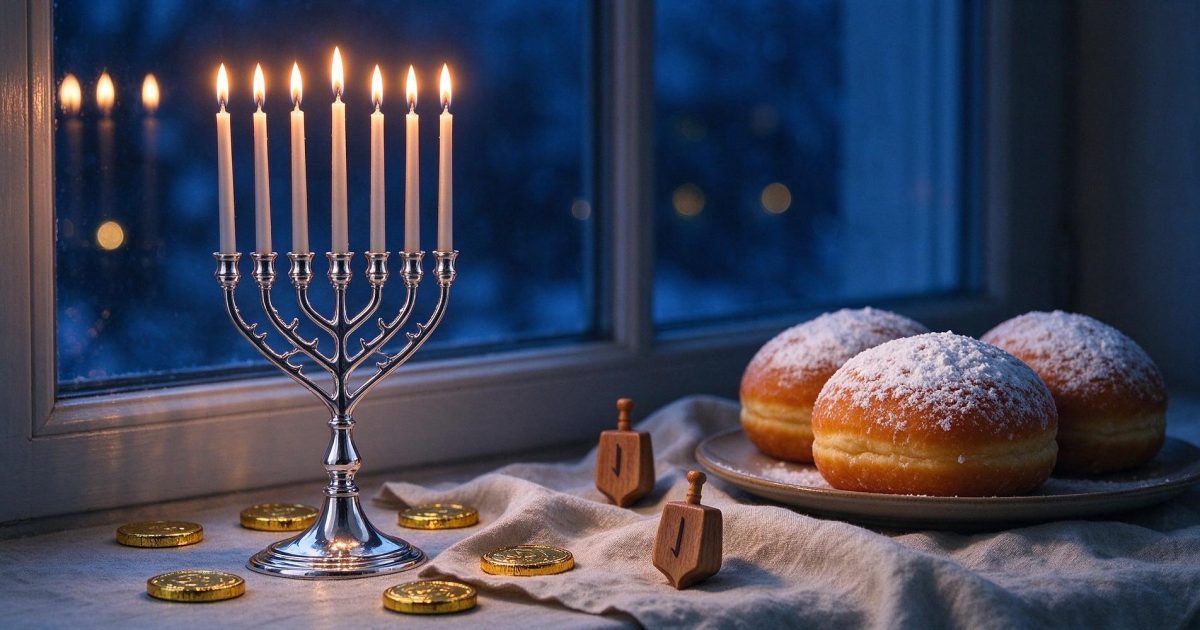
The standard greetings are "Happy Hanukkah" in English and Chag Sameach (חג שמח, "happy holiday") in Hebrew. "Chag Urim Sameach" - happy festival of lights - is a warmer, more specific version. What to avoid is obvious but common: Hanukkah is not "Jewish Christmas." It's a smaller festival on the Jewish calendar, eight nights of candles, so don't transplant Christmas language onto it ("may all your wishes come true under the menorah" reads as a mismatch).
"The respectful move is the specific phrase plus one real detail: "Happy Hanukkah - hope the whole family gets to be together for at least one of the eight nights." The correct greeting shows you know the holiday; the detail shows you know the person.
Hanukkah lines you can send:
- To a colleague: "Happy Hanukkah! Hope you get to light the candles at home and not at your desk."
- To a client: "Wishing you and your family a happy Hanukkah and a bright end to the year."
- To a close friend: "Chag Urim Sameach! Save me a latke - I'm counting on at least one of the eight nights."
Eid (and Ramadan before it)
The standard greeting is Eid Mubarak (عيد مبارك, "blessed Eid"). There are two Eids - Eid al-Fitr at the end of Ramadan, and Eid al-Adha about two months later - and the same greeting works for both. A common, warm phrase is Kull 'am wa antum bi-khair (كل عام وأنتم بخير, "may you be well every year"), which Arabic speakers also use for birthdays and the new year. What to avoid: don't wish "Happy Ramadan" as if Ramadan were a party. Ramadan is a month of fasting, where "Ramadan Kareem" or "Ramadan Mubarak" is the fitting phrase, and Eid is the celebration that follows. Mixing them up is the giveaway that you're guessing.
Eid lines you can send:
- To a colleague: "Eid Mubarak! Hope the day is full of family, food and zero emails."
- To a client: "Eid Mubarak to you and your family. Kull 'am wa antum bi-khair."
- To a friend at the start of Ramadan: "Ramadan Kareem! Wishing you easy fasts and long evenings with the people you love."
Christmas
"Merry Christmas" is right for people you know celebrate it. For everyone else, or when you're unsure, "Happy holidays" covers you. The over-correction - refusing to say "Merry Christmas" to someone who clearly celebrates it - is its own small miss. Also check the date: many Orthodox Christians, including in Russia, Serbia and Georgia, and Coptic Christians in Egypt celebrate on 7 January, so a greeting on 25 December arrives early for them.
Christmas lines you can send:
- To a colleague: "Merry Christmas! Hope the out-of-office stays on for the whole break."
- To a client: "Merry Christmas to you and the team, and thank you for a good year of working together."
- To a close friend: "Merry Christmas! First year in the new flat - I want photos of the tree, crooked star and all."
New Year: the safest greeting for a mixed list
The 1 January New Year is the one seasonal greeting almost nobody minds, whatever they celebrate, which makes it the natural choice for clients, suppliers and a whole team at once. "Happy New Year" works on its own; a line about the year ahead makes it yours. The Jewish New Year is a different holiday: Rosh Hashanah falls in September or October, and the greeting is Shana Tova ("a good year") or Shana Tova Umetuka ("a good and sweet year"). Send it before the holiday starts, not in January.
New Year lines you can send:
- To a client list: "Happy New Year! Thank you for the work we did together this year - looking forward to the next round."
- To the team chat: "Happy New Year, everyone. Whoever fixed the release in December, the first coffee of January is on me."
- To a Jewish colleague in September: "Shana Tova! Wishing you a good and sweet year."
Clients, colleagues and the once-a-year list
Holiday messages are the one stretch of the year when most people write in bulk, and that's fine. Most of the list isn't expecting a letter; they're expecting to be remembered at all.
Clients and suppliers. A clean, professional line with the right holiday name is the whole job. If you worked on something together this year, name it: "the October launch" turns a mailshot into a message.
Colleagues and the team chat. The thread fills with identical "Happy holidays everyone!" lines. Add one detail instead - the project that finally shipped, the colleague who carried December - and you're not the eleventh copy.
The once-a-year acquaintance and the neighbours. You exchange one message a year, and this is it. A warm, short greeting is exactly the right size. Labouring over it would be odd.
The people this greeting is your only thread to. Family you rarely call, the friend you're slowly losing to distance, the person you've been meaning to make up with. For them a stock "thinking of you this holiday season" quietly confirms the drift. Write three real sentences with one thing from this year - a new job, a hard twelve months, the baby who arrived in spring - and one line that points forward: "Hope next year is kinder to you than this one was."
The principle behind all of them
- Match the tradition exactly, or default to neutral. Never substitute one holiday's language for another's, and never blend two holidays into one greeting.
- Add one specific, non-religious detail when you can - the family gathering, the food, the trip, something from this year - which works across every tradition and makes the message personal.
- Keep it short. Holiday greetings go out by the dozen; one warm, correct sentence beats a paragraph.
- When in real doubt, ask or stay neutral. Guessing wrong costs more than playing it safe.
What makes a holiday greeting sound mass-produced
The fastest tell is "warm wishes this holiday season." It's the boilerplate opener, and it announces that no specific thought followed. Keep it for the genuine mass-send and cut it everywhere else.
The second is the three-noun stack: "joy, peace and prosperity," "health, happiness and success." One of those words at most in a real message. Three in a row is padding.
The third is length in the wrong place. For the mass-send, one or two sentences. For someone who matters, a short paragraph with one true thing about the year. A round-robin letter listing your family's achievements is not a message to one person; it's a broadcast at them.
Hebrew and Arabic greetings: words and direction
Hebrew and Arabic are written right to left, and a greeting that arrives with the punctuation on the wrong side or a name in the wrong place looks careless in exactly the moment you were trying to show care. The usual culprit is a mixed line: a Latin name, a number or an emoji at the end of a Hebrew or Arabic sentence can make the full stop jump to the other side. Two habits help. Put the name at the start of the line rather than at the end, and send the greeting to yourself first to see how it looks on a phone.
If you don't read the script, a greeting in English with the phrase in Latin letters - "Eid Mubarak," "Chag Sameach" - is safer than a line you can't check. And if you want it written in Hebrew or Arabic, ask for exactly that and name the holiday.
"Don't ask for "a holiday message." Ask for "an Eid Mubarak message for a colleague, warm but professional," or "a Hanukkah greeting for a close friend, mentioning their kids." The specificity is the whole point.
The Wish Generator chat works this way: it writes in the language you write to it in, switches language when you ask, and text greetings are free. Tell it the holiday, who it's for and one detail from this year, then ask for it shorter or more formal until it fits.
Holiday greeting questions
Is it okay to say "Merry Christmas" to someone who doesn't celebrate it?
It's rarely offensive, but it shows you didn't think about who they are. If you know they keep a different holiday, use that holiday's greeting when it comes. If you don't know, "Happy holidays" or "Happy New Year" is the better choice in December.
What do you say for Eid al-Adha?
"Eid Mubarak" works for Eid al-Adha exactly as it does for Eid al-Fitr. You can also say "Eid al-Adha Mubarak" to be specific, or add "Kull 'am wa antum bi-khair," which wishes the person well for every year to come.
Can I send one greeting for Hanukkah and Christmas together?
Better not. When the two fall in the same week, a blended "Happy Chrismukkah" style message reads as a joke or as a guess. Send each person the greeting for the holiday they keep, or use a neutral "Happy holidays" for a mixed group.
What should I write in a holiday card for a client?
One or two sentences: the right holiday name (or "Happy New Year" if you're unsure), a thank-you for the year, and one thing you did together if there was one. Skip the three-noun wishes and the long letter. A short, correct, specific card is what gets read.
When should I send a Rosh Hashanah greeting?
In the days before the holiday starts, when people are wishing each other "Shana Tova." Rosh Hashanah falls in September or October and begins at sunset, so a greeting sent that afternoon or earlier arrives on time. Between Rosh Hashanah and Yom Kippur, "Gmar Chatima Tova" is the customary wish.